



In this article you will find:
What is passport OCR?
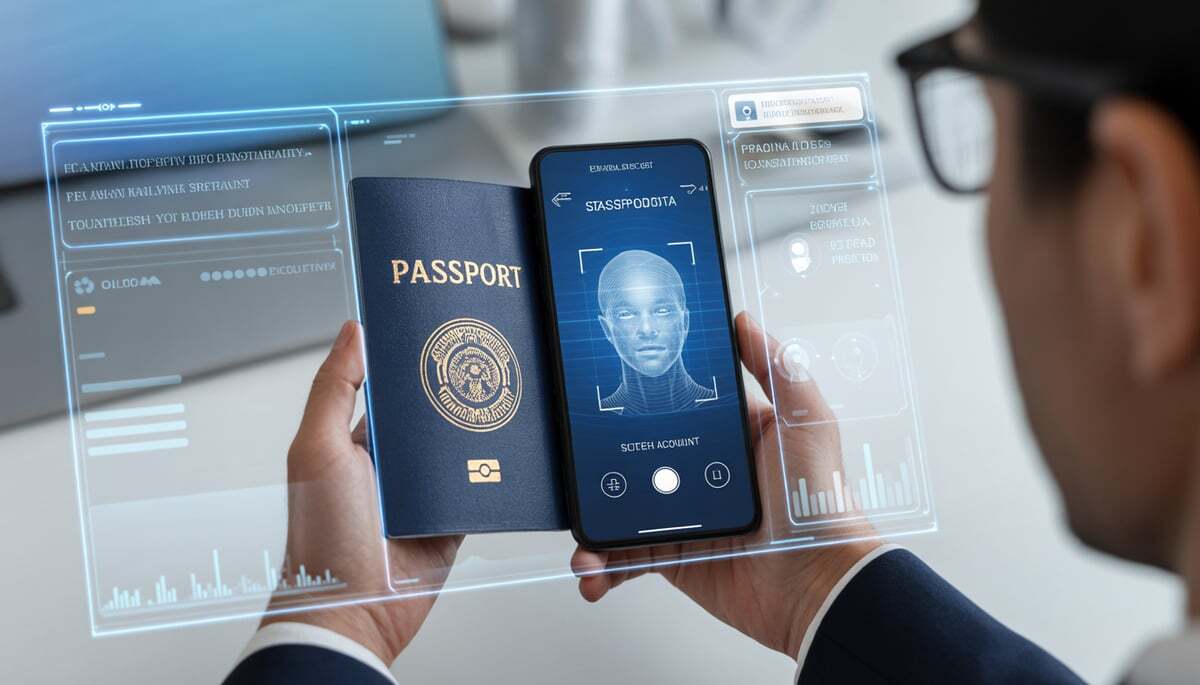
Passport OCR (Optical Character Recognition) is a technology used in identity verification to extract and process data from passports automatically. It converts scanned or photographed passport information into structured, readable data that systems can analyze.
This technology is widely used in digital onboarding processes to speed up identity verification and reduce manual errors.
Why is passport OCR important in identity verification?
Passport OCR plays a critical role in modern identity verification systems. It allows businesses to:
- Automate data extraction from passports
- Reduce human errors in data entry
- Speed up user onboarding processes
- Improve accuracy in identity validation
- Enhance fraud detection capabilities
As businesses move toward digital operations, OCR has become essential for scalable verification.
How does passport OCR work?
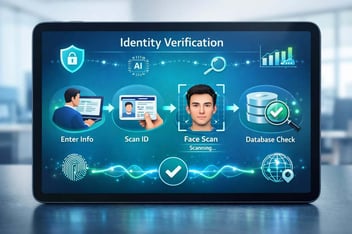
Passport OCR works by combining image processing and machine learning technologies to extract data from passport documents.
1. Image capture
The user uploads or takes a photo of their passport using a mobile device or camera.
2.Image preprocessing
The system enhances the image by adjusting brightness, contrast, and alignment to improve readability.
3. Text detection
OCR technology identifies areas in the image that contain text, including the Machine Readable Zone (MRZ).
4. Data extraction
The system extracts key information such as:
- Full name
- Passport number
- Nationality
- Date of birth
- Expiration date
5. Data validation
Extracted data is validated against formats, algorithms, or external databases.
6. Fraud detection
AI models analyze the document for signs of tampering or forgery.
What is the Machine Readable Zone (MRZ)?
The Machine Readable Zone (MRZ) is the section at the bottom of a passport that contains encoded identity information.
Passport OCR systems specifically analyze this area because:
- It follows a standardized format
- It is easier to read accurately
- It contains critical identity data
Using MRZ improves both speed and accuracy in verification.
Benefits of using passport OCR
Businesses that implement passport OCR gain several advantages:
- Faster onboarding processes
- Reduced operational costs
- Improved data accuracy
- Better user experience
- Scalable verification systems
This makes OCR a key component in digital identity verification.
Challenges of passport OCR
Despite its advantages, passport OCR also faces some challenges:
- Poor image quality from users
- Variations in passport formats across countries
- Lighting and glare issues
- Detection of sophisticated fraud attempts
Modern AI-powered OCR systems are continuously improving to overcome these limitations.
How AI improves passport OCR
Artificial intelligence enhances OCR performance by:
- Improving text recognition accuracy
- Detecting anomalies and fraud patterns
- Adapting to different document formats
- Learning from large datasets over time
- Providing real-time guidance to users during image capture, helping them take better photos for faster and more accurate data extraction
- Detecting common issues such as fingers covering information, poor lighting, blur, glare, cropped edges, or incorrect document positioning
- Guiding users to retake the image when quality standards are not met, reducing verification errors and abandonment rates
AI-driven OCR systems are significantly more reliable than traditional OCR technologies.
How to choose a passport OCR solution : When selecting a passport OCR solution, consider the following:
Accuracy: Does the system extract data reliably across different document types?
Speed : Can it process documents in real time?
Integration: Does it offer APIs for easy implementation?
Security: Does it include fraud detection and validation features?
Global coverage : Can it handle passports from multiple countries?
A modern approach to OCR-based identity verification
Today’s businesses need OCR solutions that are not only accurate but also flexible and scalable.
Truora
Truora integrates advanced OCR technology into its identity verification solutions, enabling businesses to automate passport data extraction and validation.
With Truora, companies can:
- Extract passport data in real time
- Combine OCR with biometric verification
- Detect fraud using AI-powered analysis
- Integrate verification workflows through scalable APIs
Best for:
Businesses looking to streamline onboarding and improve identity verification accuracy at scale.
The future of passport OCR
Passport OCR will continue evolving as part of broader identity verification systems. Key trends include:
- Real-time document verification
- AI-powered fraud detection
- Increased automation
- Seamless mobile-first experiences
Companies that adopt advanced OCR technologies will gain a competitive advantage in security and user experience.
Final thoughts
Passport OCR is a fundamental technology in modern identity verification. By automating data extraction and improving accuracy, it enables businesses to verify users faster and more securely.
As digital onboarding becomes the standard, OCR will remain a critical component of scalable identity verification systems.
Looking to improve your identity verification process with OCR?
Discover how Truora helps businesses automate passport verification, reduce fraud, and scale globally.
👉 Request a identity verification demo and optimize your onboarding today.
Frequently Asked Questions
What is OCR in passport verification? : OCR in passport verification is the technology used to extract and process data from passport images automatically.
How accurate is passport OCR?: Modern AI-powered OCR systems can achieve high accuracy, especially when combined with image preprocessing and data validation.
What is MRZ in a passport? : The MRZ (Machine Readable Zone) is a standardized section in passports that contains encoded identity information.
Can OCR detect fake passports? :OCR alone cannot detect all fraud, but when combined with AI and verification systems, it helps identify suspicious documents.
Fill out the form below and we'll help you with that: