



In this article you will find:
What are identity verification tools?
Identity verification tools are technologies that allow businesses to confirm that a person is who they claim to be. These tools are essential for preventing fraud, complying with regulations, and enabling secure digital interactions.
They are widely used across industries such as fintech, e-commerce, marketplaces, and SaaS platforms.
Why are identity verification tools important?
As more services move online, verifying user identity has become critical. Identity verification tools help businesses:
- Prevent fraud and identity theft
- Comply with KYC and AML regulations
- Improve user onboarding processes
- Build trust with customers
- Reduce operational risks
How do identity verification tools work?
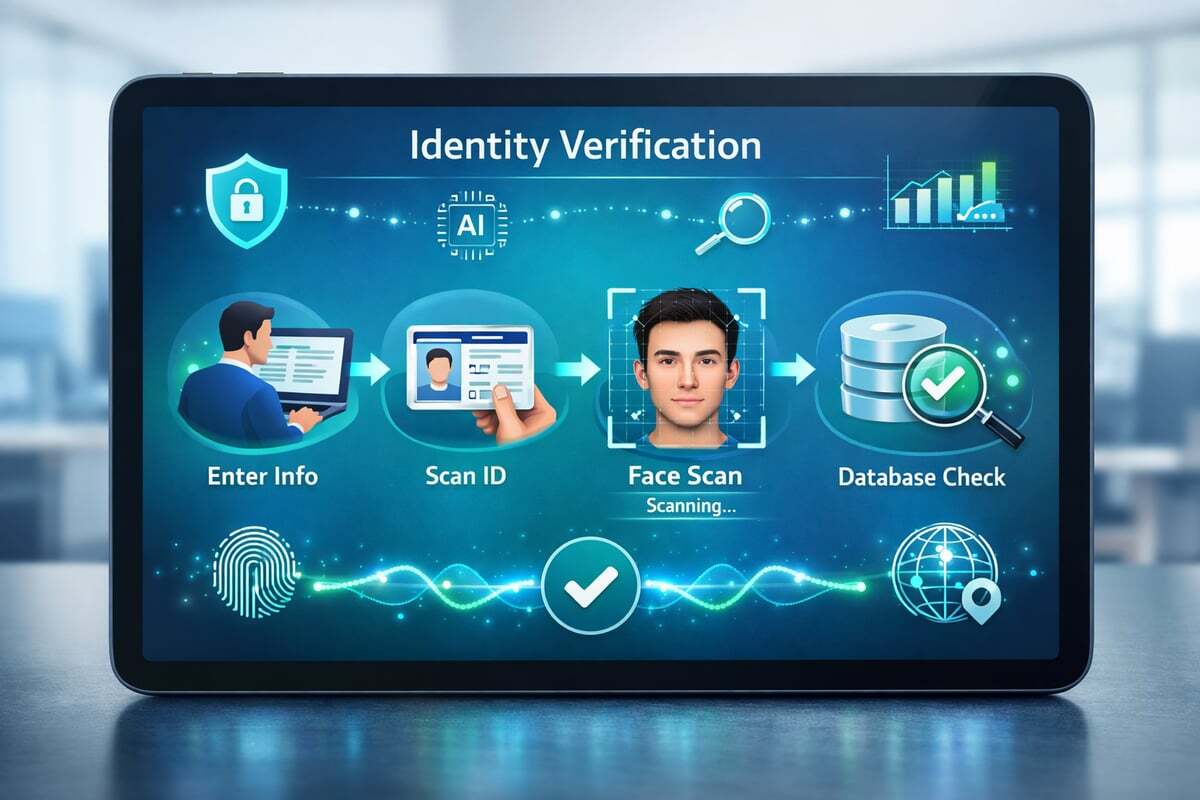
Identity verification tools typically follow a multi-step process to validate a user’s identity:
1. Data collection
The user provides personal information such as name, date of birth, and identification documents.
2. Document verification
The system analyzes official documents like passports or ID cards to confirm authenticity.
3. Biometric verification
Facial recognition or liveness detection is used to ensure the person is real and matches the document.
4. Data validation
User information is checked against trusted databases and records.
5. Risk analysis
AI systems evaluate potential fraud risks based on behavior and data patterns.
What types of identity verification tools exist?
There are several types of identity verification tools, each designed for different use cases:
Document verification tools
Used to validate official IDs such as passports, driver’s licenses, and national IDs.
Biometric verification tools
Use facial recognition, fingerprints, or liveness detection to confirm identity.
Database verification tools
Cross-check user data against government or private databases.
Two-factor authentication (2FA) tools
Add an extra layer of security through codes or device verification.
Contact verification tools
Validate email quality and phone numbers to confirm active, reachable, and low-risk contact information.
Geolocation verification tools
Analyze user location data to detect inconsistencies, high-risk regions, or suspicious access attempts.
Device integrity tools
Assess device health, security signals, and risk indicators such as rooted devices, emulators, or unusual configurations.
AI-powered verification tools
Combine multiple signals to automate fraud detection, risk scoring, and identity decision-making in real time.
Use machine learning to detect fraud patterns and automate decisions.
What industries use identity verification tools?
Identity verification tools are essential across multiple industries:
-
Fintech: Used for onboarding, compliance, and transaction monitoring.
-
E-commerce: Helps prevent fraudulent purchases and account takeovers.
-
Marketplaces: Ensures trust between buyers and sellers.
-
SaaS platforms : Controls access and protects user accounts.
-
Gaming and digital platforms : Prevents fraud, bots, and underage access.
-
How to choose the right identity verification tools : Selecting the right tools depends on your business needs. Consider the following:
-
Security level :Does the tool provide biometric and AI-based verification?
-
User experience :Is the process fast and easy for users?
-
Integration : Can it be easily integrated via API?
-
Scalability : Will it support your business as it grows?
-
Global coverage : Can it verify users in different countries?
A modern approach to identity verification
Today’s businesses need flexible and scalable identity verification tools that adapt to different use cases and markets.
Truora
Truora provides a comprehensive suite of identity verification tools designed for modern digital businesses.
With Truora, companies can:
- Verify identities using documents and biometrics
- Access reliable data validation sources
- Integrate verification processes through scalable APIs
- Customize verification flows based on risk levels
Best for:
Businesses looking for a flexible, scalable, and user-friendly identity verification solution.
The future of identity verification tools
Identity verification tools are evolving rapidly with advancements in technology. Key trends include:
- AI-driven automation
- Real-time identity verification
- Increased use of biometrics
- Frictionless user experiences
- Stronger global compliance requirements
Companies that adopt modern verification tools will be better positioned to reduce fraud and scale securely.
Final thoughts
Identity verification tools are no longer optional—they are essential for any business operating online. From preventing fraud to improving user experience, these tools play a critical role in building secure digital environments.
Choosing the right solution can make a significant difference in both security and business growth.
Looking for reliable identity verification tools?
Discover how Truora helps businesses verify users, reduce fraud, and scale globally.
👉 Request a demo and start building secure digital experiences today.
❓ Frequently Asked Questions
-
What are identity verification tools used for? : They are used to confirm user identity, prevent fraud, and ensure secure digital interactions.
-
Are identity verification tools secure? :Yes, modern tools use AI, biometrics, and data validation to ensure high levels of security.
-
What is the difference between KYC and identity verification? : KYC is a regulatory process, while identity verification tools are the technologies used to verify users.
-
What is biometric identity verification? : It is a method that uses physical characteristics, such as facial recognition, to confirm identity.
Fill out the form below and we'll help you with that:


-Mar-09-2022-12-53-40-90-PM.jpg?width=352&name=610c090ddf1c70d6f6debd52_y_combinator_startup_truora_background_check%20(1)-Mar-09-2022-12-53-40-90-PM.jpg)