



In this article you will find:
In Mexico, digital identity verification has become a critical challenge for companies operating in digital environments. The rise of fraud, identity theft, and remote onboarding processes has forced the search for new ways to validate users without friction.
In this context, the registration of cell lines and the use of telecom data emerge as one of the most effective tools to strengthen security without affecting user experience.
But how does it really work? How reliable is it? And, most importantly, how can companies leverage it strategically?
What is cell line registration and what is its role in Mexico?
Cell line registration seeks to associate a telephone number with a real identity. This concept has been key in various regulatory initiatives in Mexico, aimed at:
- Reducing crimes such as fraud and extortion
- Improving user traceability
- Strengthening security in digital channels
Beyond the regulatory framework, what is important for companies is to understand that the cell number has become a key digital identifier.
Today, practically any digital interaction depends on a telephone number:
- Account creation
- Authentication (OTP)
- Password recovery
- Transaction validation
The problem: why the cell number alone is no longer enough
Many companies still use the cell phone only as a contact channel or basic authentication (SMS or WhatsApp). However, this presents significant risks:
- Numbers that do not belong to the real user
- Newly activated lines for fraud
- SIM swapping
- Inconsistent data between identity and phone
This means that having a number does not guarantee knowing the user.
This is where telecom data comes in.
What are telecom data and how do they strengthen identity verification?
Telecom data are signals from telecommunications operators that allow for the validation of the authenticity and behavior of a cell phone number.
With this type of information, it is possible to analyze:
- Line age
- Status (active/inactive)
- Relationship between identity and number
- Usage history
- Risk indicators
This allows transforming a simple data point (the number) into a source of intelligence to prevent fraud.
Advantages of using cell verification with telecom data
1. Significant reduction of fraud
Detects suspicious patterns before the user completes the process.
2. Less friction in onboarding
No need to upload documents or complex processes.
3. Real-time validation
Responses in seconds improve conversion.
4. Scalability
Allows for the validation of thousands of users simultaneously without human intervention.
5. Better user experience
Faster, simpler, and more reliable processes.
Real use cases in Mexico
Fintech and digital banking
- Account opening with additional validation
- Fraud prevention in transfers
Ecommerce and marketplaces
- Validation of buyers and sellers
- Reduction of chargebacks
Insurtech
- Verification in the issuance of policies
- Fraud prevention in claims
Digital platforms
- Validation of new users
- Protection against fake accounts
Truora's Differentiation: Intelligent Cell Verification for Latin America
In a market where many solutions focus solely on basic validations, Truora offers an additional layer of intelligence based on telecom data.
What makes Truora different?
Advanced cell verification
Not only validates the number but also its context and level of risk.
Simple integration via API
Easily adapts to any digital flow.
Regional coverage
Works in multiple countries in Latin America, including Mexico.
Automation with AI
Enables scalable processes without operational friction.
Focus on conversion + security
It is not just about preventing fraud but also about not losing legitimate users.
How to implement cell verification in your company
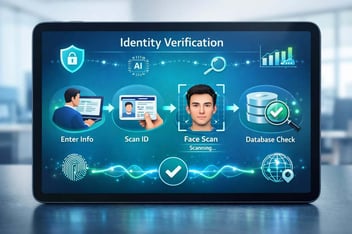
Integrating telecom data into your processes is simpler than it seems. A typical flow includes:
- The user enters their cell number
- A validation is performed automatically in the background
- Risk signals are analyzed
- A decision is made (approval, review, or rejection)
All of this occurs in seconds and without affecting user experience.
The future: digital identity based on intelligent signals
The future of identity verification in Mexico and Latin America will not rely on a single method but rather on the combination of multiple signals:
- Telecom data
- Biometrics
- Digital documents
- Artificial intelligence
In this ecosystem, telecommunications data will play a key role as the first layer of fast, scalable, and reliable validation.
Conclusion
Cell line registration is just the starting point. The real value lies in how companies use the data associated with that number to make smart decisions.
Implementing cell verification with telecom data is no longer a competitive advantage: it is a necessity for any company operating digitally in Mexico.
Take your identity verification to the next level
If your company is facing challenges such as:
- Fraud in onboarding
- Low conversion in registrations
- Fake or risky users
- Slow validation processes
It's time to evolve your strategy.
With Truora you can:
- Validate users in seconds
- Reduce fraud from the first contact
- Improve conversion without friction
- Scale your operation efficiently
👉 Request a demo and discover how to integrate cell verification with telecom data into your digital flow.
Fill out the form below and we'll help you with that:


-Mar-09-2022-12-53-40-90-PM.jpg?width=352&name=610c090ddf1c70d6f6debd52_y_combinator_startup_truora_background_check%20(1)-Mar-09-2022-12-53-40-90-PM.jpg)