




In this article you will find:
What is K-ID in identity verification?
K-ID (Know Your Identity) refers to advanced identity verification processes that combine multiple technologies to validate a user’s identity in digital environments. It goes beyond traditional KYC (Know Your Customer) by incorporating real-time data validation, biometrics, and AI-driven analysis.
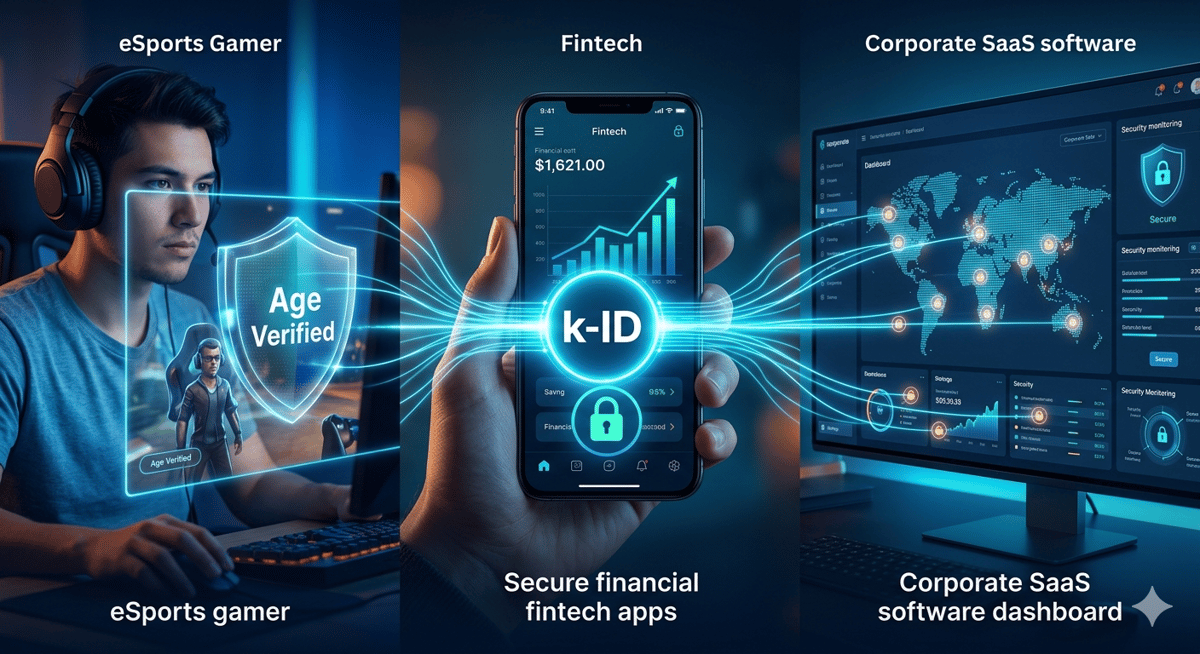
K-ID is especially relevant for industries that require high levels of security and compliance, such as fintech, gaming, and digital platforms.
Why is K-ID important for modern businesses?
As digital transactions increase, businesses need more reliable ways to verify users and prevent fraud. K-ID helps organizations:
- Reduce identity fraud and impersonation
- Comply with international regulations
- Improve onboarding speed and user experience
- Enable secure access to digital services
- Build trust with users
What platforms support K-ID for identity verification?
There are different types of platforms that support K-ID processes depending on the use case and industry. Instead of focusing on rigid solutions, modern businesses are adopting flexible verification ecosystems.
1. Fintech platforms
Fintech companies use K-ID to verify users during account creation, transactions, and compliance checks.
Common use cases include:
- Digital banking onboarding
- Payment verification
- Anti-money laundering (AML) processes
2. Gaming and digital entertainment platforms
Gaming platforms increasingly rely on identity verification to:
- Prevent underage access
- Comply with regional regulations
- Avoid fraud and multi-account abuse
K-ID enables secure and seamless player verification.
3. Marketplaces and gig economy platforms
Platforms that connect users (buyers, sellers, drivers, etc.) use K-ID to ensure trust and safety.
Examples of use cases:
- Seller verification
- Driver or worker onboarding
- Fraud prevention in transactions
4. SaaS and digital service platforms
SaaS companies use K-ID to manage user access and prevent unauthorized activity.
This includes:
- Account authentication
- User verification for sensitive actions
- Access control
Key technologies behind K-ID
K-ID is powered by a combination of technologies that work together to verify identities accurately.
Document verification
Validates official IDs such as passports, national IDs, or driver’s licenses.
Biometric authentication
Uses facial recognition or liveness detection to confirm identity.
Data validation
Cross-checks user information against trusted databases.
Device integrity verification
Analyzes device signals such as repeated login attempts, suspicious IP activity, device type, emulators, or compromised environments.
Contact quality verification
Evaluates the reliability of phone numbers and email addresses to detect invalid, disposable, or high-risk contact data.
Geolocation analysis
Identifies whether an onboarding attempt is coming from high-risk locations, unusual regions, or areas linked to fraud activity.
Graph intelligence
Uses relationship mapping to detect connections between users, devices, phone numbers, emails, or accounts previously associated with fraud.
AI and machine learning
Detect fraud patterns, automate risk scoring, and improve verification accuracy over time
How to choose a K-ID compatible solution
When evaluating platforms that support K-ID, consider the following:
Flexibility
Can the solution adapt to different use cases and industries?
Integration
Does it offer easy-to-use APIs and SDKs?
Global reach
Can it verify users across multiple countries?
User experience
Is the verification process fast and frictionless?
Security
Does it use AI and biometrics to prevent fraud?
A flexible approach to K-ID verification
Modern identity verification solutions are designed to integrate seamlessly with different platforms and business models.
Truora
Truora provides a flexible identity verification infrastructure that supports K-ID processes across multiple industries.
It enables businesses to:
- Verify users using document and biometric validation
- Access reliable data sources for identity checks
- Integrate verification flows through scalable APIs
- Adapt verification processes based on risk levels and use cases
Best for:
Companies looking for a scalable and adaptable identity verification solution, especially in Latin America and global expansion scenarios.
The future of K-ID and identity verification
K-ID is becoming a standard for digital identity as businesses demand more secure and scalable solutions.
Key trends include:
- AI-driven verification processes
- Real-time identity validation
- Increased regulatory requirements
- Frictionless user experiences
Organizations that adopt K-ID early will be better positioned to prevent fraud and scale securely.
Final thoughts
K-ID is not limited to a single platform—it is an approach to identity verification that can be implemented across different industries and technologies.
Choosing a flexible solution that integrates easily and adapts to your business needs is essential for staying competitive in today’s digital landscape.
Looking for a flexible K-ID identity verification solution?
Discover how Truora helps businesses verify users securely, reduce fraud, and scale globally.
👉 Request a demo and start building a safer digital experience.
Frequently Asked Questions
What does K-ID mean in identity verification?
K-ID refers to advanced identity verification processes that combine multiple technologies to validate user identities securely.
Which platforms support K-ID?
K-ID is supported by various platforms, including fintech, gaming, marketplaces, and SaaS solutions that require secure identity verification.
Is K-ID the same as KYC?
No. KYC focuses on regulatory compliance, while K-ID includes broader identity verification technologies such as biometrics and AI.
Fill out the form below and we'll help you with that: